Tuesday, June 21, 2011

OTD - Obsessive Tidiness Disorders

What is it with our society in the UK that makes most of it so unbearably obsessive about tidiness? I mean don’t get me wrong there are times and places where it is the done thing, such as the uniform rings on a Wembley turf or topiary in Blenheim Palace or even just uin general as i hate as much as anyone litter or fly-tipping. But in the main do we really need to be so obsessive about things that really don’t matter such as cutting the grass verges so often or so short, flailing hedgerows maintaining a fenceline in a straight and orderly fashion with no 'weeds'?

Neat, tidy, square, straight and completely wildlife unfriendly
Many of these form my annual gripes with LA's and private landownerss. All demonstrate various facets of tidiness in society that have impacts on the natural environment that far outweigh actual real cost benefits of these actions.

We have a beautiful park opposite my house, the former garden of an old manor house long since gone; it is surrounded on most sides by a lovely old stone wall which in some parts forms a road boundary with a sloping grass verge, in days gone by it was rich in wild flowers and having the sun most of the day great for butterflies. However, once upon a time somebody said they were weeds and untidy and now each year a nice little man from the council comes out with his back pack of herbicide and proceeds to kill everything that is growing along the base of the wall, not only does he spray there he sprays everywhere, around the bases of the big trees, the signs that say don’t damage the trees, along the base of the post and rail livestock fence when the beasts are in the field (two sick cows this year I am told will be ok), around the bins all around the benches in fact anywhere that looks like it needs spraying with herbicide. the areas that can be reached by a strimmers are then shawn close to the ground so not even a dandylion grows

Agent Orange strikes again
The end result is a very visually unpleasing strip or patch of dead brown vegetation followed by bare dead earth for the remainder of the year. The main reason for this they say is, ‘they can’t get the lawn mowers up close to such structures’ nor is it safe to strim on a bank, we've had complaints about the weeds and we need to make everything neat and tidy.

Why, I ask myself is it so important that they have to resort to poisons when in such places where particularly in the spring is an abundance of spring flowers and associated insects and why, in this particular location, do they have to cut the grass so frequently and so close to these structures, it is not as if it is is Blenheim Palace after all its Herrington bloody park for god's sake.


This leads me to the other and more serious consequence of these operations; after years of poisoning the verges and base of the wall nothing grows along it now, which because of its fine soil mix, has led to a massive amounts of erosion and inevitably the instability in the wall.


Queue the inevitable council overreaction of closing half the road off whilst they stabilised the wall. Will the penny finally drop as to the reasons and solutions to this conundrum? We will have to wait and see if the little man from the council comes out with his back pack next year, I will not hold my breath.


Just as I thought I had got over this rant on my tidy neightbours I had to witness another episode last week too and that really got my blood boiling.

This year has been a good year so far for migrant birds such as martins and despite the dry conditions everyone has moaned on about (I for one have not). They have been busy building nests on some of the local houses as always, all of which bar one have been happy with their African visitors. They provide endless hours of enjoyment twittering to each other on the telephone lines and aerobatic displays in the park dispatching thousands of pesky flies to boot, so most people see them as a good addition.

However, one has not been so fortunate and its attempts at nesting were always ending in disaster because the house owner kept poking the nests down. His reason they were ‘making a mess’ and “they were not neat and tidy nesters like the blackbirds” what absolute cacbabble a total croc of shite.

Well Im afraid that was a criminal act so he was formally warned by the police for interfering with nesting birds. It is an all to common event, if not always a deliberate act, as we keep our gardens and leylandii hedges ‘neat and tidy’. Ignorance is no defence in this case, I personally would have prosecuted him as it is such a selfish act and so small minded and as i say far to common an event.
House martin nests - leave them alone
Wildlife has enough hardships without these many unnecessary acts just for the sake of a bit ‘neat and tidiness’.

Monday, June 6, 2011

Breaking the law

Birds were my first great love (both varieties feathered and the other lot) but also exploring, which was to get me; and probably still does, into so much trouble. It was however where I learnt some of the basics of nature watching or finding as I prefer to think of it. I was considering this as I watched some new additions in Druridge Bay last week.
Beautiful Avocets
 Avocets in my youth were an evocative emblem of the RSPB that all aspiring naturalists wanted to tick off. I didn’t see my first avocet for many years and had to travel to see it but now I was watching the most northerly hatched Avocets in the Country. A fitting tribute to the management of Northumberland Wildlife Trusts reserves in Druridge Bay but also to the birds exploratory instincts to bring it this far north.


I was considering this attribute further at the weekend as I took a camping trip with my son to Cumbria. Everything has to be planned now and scheduled; where are you going, what are you doing, when will you be back etc. We have lost that spontaneity of our youth, the mischief that drives you to explore and find out those hidden treasures we are so forbidden from finding in our closeted modern legislated world or at least I thought we had.


The site we stay on is near Appleby but it could be any corner of the UK and it isn’t really camping anymore. My wife calls it ‘glamping’, as this is what her friends call it after years of luxury camping trips. The benefits are there to see especially as the weather was very inclement and the warmth of an electric heater and a stable tent the size of York minster were very much appreciated.

Off the beaten track into a hidden world
However, the land around is quite beautiful and very explorable with many almost sunken lanes and wooded valleys and crystal clear becks with buttery yellow trout, but with a young boy and inclement weather not really a lot to do in his realms of interest. But these are places I explored as a youth, surely that basic urge must still be there, it just needs to be persuaded there is more to life than an Xbox.


So off we went, drearily at first but I still just couldn’t resist, mischief coursing threw my blood, getting off the path to see what was around the corner or over that hedge. Kids today just never get the chances to do this anymore, they are either stuck on a computer or worse still, immediately branded a delinquent and told to ‘get off my land’, and chased for doing what we did naturally only a few years back.


As we slipped off the trail we entered a small valley full of flowers, shrouded trees and  singing birds. Who was more excited me or my son is debateable as he plodged in the mud. We hid from some passing walkers so know one else would know our discovery. This really was a blast from the past as I found the hidden nest of a redstart and showed a half a dozen glossy blue pearls to him to admire, placing one against his cheek to feel its warmth before carefully replacing the egg and surrounding cover then watching the bird return totally unconcerned minutes later. 


Blue pearls of beauty and wonder - redstart nest and eggs
 We watched a red squirrel run along a branch and as the sun came out the light illuminated some shadowy figures on the bed of the stream. Wild brown trout as sweet as a nut and something for another day with a line, hook and worm, we also turned a few boulders and found plenty of crayfish hiding beneath and I encouraged him to pick them up discovering them first hand.

Wild brown trout sweet as a nut

The moral of this tale if there is one, is that apart from watching the squirrel all the things we were doing were technically illegal even though I do myself possess a licence to handle native crayfish, I don not possess one to peer into the nest of a bird or fish for those trout or even be on that land. Was I wrong in doing this for encouraging such wanton law breaking, in short I don’t think I was, the look in my sons eye at such delicate marvels as those redstart eggs said it all.


We are so obsessed with laws and regulations these days we have forgotten just how important the art of discovery is without it where are the naturalists of the future ever going to come from if they are not allowed to find.

Thursday, June 2, 2011

Where the poppies still grow

“In Flanders fields the poppies blow” an inspirational line from an inspirational poem by John Mc Crae, I often corrupt the words to ‘in farmers fields the poppies grow’ as at this time of the year the corn poppy starts to flower its ephemeral bloom.


Just as the blazing yellow of the oilseed rape dies away and the first heads appear on the corn the first poppies push through to bring what can sometime be the most striking blaze of colour the countryside will ever see. All too often however this and many other wild flowers are just token gestures where we allow them to flower as we strive still for uniformity and higher production.


Where margins around fields are left and hedgerows are not flailed this simple and easily achieved action makes a massive difference to the overall wealth of biodiversity in any area, from insects to wild flowers to the increased survival of young birds and mammals. It gives us a hint of what we have lost in these post world war years of production, production, production.


To me the poppy is more than a weed its brief and fragile appearance in the fields and hedgerows of summer remind me of days when fields and hedges were not treated like factory floors, well at least until that too reached my childhood haunts and the hedges were grubbed out and livestock and rotation was replaced by year on year cereal production and a 'Business Park'.


I found a place the other day where I could walk through tall grasses and flick the poppies with my fingers, cow parsley's swayed and skylarks sang. I sat in my car and was treated to a great feast of wildlife, three hares chased themselves around oblivious to my presence, literally crashing into the parked wheels of my vehicle and all around the insects danced about the mayflowers bloom and martins dashed to make the feast. It was a magnificent place as the smells of damp grass triggered childhood memories and more evocative than ever a curlew rose from damp meadows, was I in heaven? Well not quite I was actually in Cramlington!


A magical carpet of poppies
 Am I looking through rose coloured glasses, are my memories clouded by an environmental doctrine, ‘it was never like this when I was lad’ many say. Well I'm not to sure anymore, near my home the poppies are filling the fields of ripening rape and are bursting with the song of nesting sedge warblers, over head, larks sing and swifts scream and the hedges are full of life. To be fair these fields all have wide margins, are punctuated by decent hedgerows and a sympathetically managed country park with lots of mixed habitats within and around.


Nearby though the same crops grow mile on mile but with no margins and and are surrounded by gappy, flailed hedges, it’s like a different world populated by nothing but crows, pigeons and pheasants. This is what some people call our ‘managed’ landscape and it is what many people except as the norm not realising what should be there. Well it’s not for me, nor should it be for most, especially when there are choices and alternatives out there.

Looks awfully familiar
As the hare’s finished there impromptu display of lust and vigour I moved off down the lane where a roe deer stood in the shade of a huge sign, proudly proclaiming ‘Land for Development’ coming to a field near you. Like the poppy it will all be gone in a flash under another underused, over priced and more importantly un-needed office development or housing project, is it a price we can hardly afford to pay both economically and environmentally?

Just type 'new business park' into Google, there are 430 million entries!!! Look through the windows of many of these developments dotted around, not just the region but the whole country, they are empty!! Dont let the 'lights on' fool you there is someone home.

For me now while the poppies still grow I will be well... watching the poppies grow.

Stoats and weasels

One of the highlights of this past winter has been the apparently high number of stoats in ermine on show around the region. The onset of an early winter and the huge amount of snow we had during November and December obviously triggered their annual moult to a larger degree than normal as stoats in ermine were being seen almost everywhere. This prompted some to say there was a plague of these smart little beasts but in reality it was just that they stood out like a sore thumb especially when the snow left us and they were just being seen more easily.

Ermine

So common were the reports that we put a request for sightings out and the response was excellent with over seventy records from as far as the river Tweed in the north to Teesdale in the south such was the extent of the reports. A big thank you to all that contributed their records we have added them to the regional record centre and it this that has prompted this article on our two, well lets say ‘lesser known’ members of the mustelid clan.


We often over look these two smart little gentlemen in their chestnut livery in favour of their more charismatic family members the otter, pine marten or badger. They also suffer a truly unfair image of skulduggery and slyness or as a wanton killer of poultry and game. None of these are really true in general terms but give a critter a bad name and it sticks.


The stoat occurs throughout Britain and Ireland, living in a wide variety of habitats and at any altitude with sufficient ground cover and food. A stoat does not like to be out in the open and as such they hunt along ditches, hedgerows, walls and through meadows and marshes. They are systematic hunters quartering the ground and all but the largest of prey is summarily dispatched by a single bite to the back of the neck.

Weasel by the road

The weasel on the other hand is much more widespread throughout Britain but absent from Ireland and many off shore islands. It is probably our most numerous carnivore. They found over wide range of habitats like the stoat but including urban areas, where they are very handy to have around if you have a mouse problem like I have had over the winter.


The weasel specialises in hunting small tunnel living prey such as voles and mice, the weasels small size means it can hunt them both above and below ground and hunt in both day and night. They do not hibernate and hunt under the snow. Like its cousin the stoat it will often take over the dens of its prey and they will have several with their range. I’ve had a weasel take up residence for the last two winters in my compost heaps for which I am very grateful as the numbers of small brown rodents increase exponentially with the winter months around my chicken’s dinner. When the weasel turns up they rapidly decline. I removed one of my compost heap recently and revealed the said den complete with mummified food reserves stored by the now absent mustelid.


Although they look similar cosmetically (I will refrain from the weasely similar jokes), their ecology is quite different especially in the breeding stakes. Both sexes live separate lives only coming together to mate. Stoat and weasel home ranges vary a lot depending on the distribution and density of prey. Resident animals may defend their territories when numbers are high and neighbours numerous but in the spring these systems break down as males of both species prospect widely for females.


Baby weasels grapple in the grit

Weasels only produce one litter a year sometime two if there are plenty of field voles about. 4-6 youngsters are born and are weaned at 3-4 weeks; they can kill efficiently at 8 weeks and split from the family group between 9-12 weeks. In a good vole year females can be pregnant at 2-3 months old.


Stoats on the other hand use a completely different breeding strategy than mass reproduction. Males mate with females, including this years kits, which may be only 2-3 weeks old, in the early summer. They do not give birth however until the following spring because implantation is delayed for 9-10 months by that time females may have dispersed a considerable distance from where they were actually born.


Stoats also have quite large litters, like weasels to compensate for high mortality rates, between 6-12 young are born, blind, deaf and bald. The female feeds them for up to 12 weeks by which time they are efficient hunters able to take out a half grown rabbit.

How cute can anything be, a baby stoat well on the way to being a stone wall killer

Food shortages is the main killer of young stoats and weasels, the trap is barely effective in control and both species occasional fall prey to hawks, owls, foxes, mink and even cats. There is little competition between the two as the stoat is larger and much more aggressive it takes larger prey like rabbits whilst its smaller cousin is an out an out ‘tunnel hunter’ reaching small rodents the stoat cannot.


They are both remarkable creatures both in looks and habits I never tire of seeing them, that fleeting glimpse as a weasel scurries across the road in front of your or watch a stoat chase and run down a rabbit like a cheetah on a gazelle is astounding to witness. The loss of a few game birds and or chickens is nothing compared to the overall good these animals do in the environment. The pleasure they give is uncountable, if encounter one try ‘squeaking’ through pursed lips like a mouse or rabbit, and you may be treated to an encounter you will never forget especially if it is a family party dancing around your feet, truly remarkable creature that deserve more respect than they get.

Monday, May 16, 2011

In Praise of Gorse

Gorse scrub - wildlife heaven

Gorse, furze, furse or whin (Ulex spp.) is a genus of about 20 plant species of spiny evergreen shrubs so Wikipedia tell. To me this much maligned shrub will always be ‘whin’ or ‘whiney bush’ it is a perennial survivor too, so maybe that’s another reason why I view it more favorably than others. I think in the main it is a very under rated plant that brings massive benefits to the countryside if not just from that brilliant splash of colour its vivid yellow flowers give on late spring days.


It is an ancient plant too, its name gives rise to many common names associated with place names geological features and species such as the self explanatory Whiney Hill, whinchat and of course the great whin sill. It is a native shrub with three species commonly found in the UK it has dense, dark green shoots and vicious spines. From March to May and often in late summer a dazzling feast of colour is given by the fragrant pea-like yellow flowers. It thrives in poor, dry acid soils, but it will grow in many suitable well drained places in a sunny position.


I remember it well from my youth as I would be covered in scratches from those thorns as I drove my way through thick gorse to reach the nests of yellowhammer and linnet or to recover an errant ferret from the many rabbit holes that lay beneath. On hot days we would sit and listen to the yellowhammer’s ‘little bit of bread but no cheese’ song and the snap, crackle and pop of the seed heads bursting in the sun’s heat.

Gorse is a fire-climax plant, well adapted to encourage and withstand fires, being highly flammable, and having seed pods that are to a large extent opened by fire or heat, this allows rapid regeneration. Typical fire recurrence periods in gorse stands are 5–20 years and this allows other habitats to take their turn in succession such as acid or calcareous grasslands.

Burnt gorse
 During the seventies and eighties large areas of gorse strewn hillsides were cleared under agricultural improvement grants at the same time we were removing miles of hedgerows and other countryside ‘improvements’. Yes, we are now replanting many but will it ever repair the damage that was done back then especially as we maintain the resulting hedges too neat and tidily. I still see linnet and yellowhammer on my local gorse patches but in nowhere near the abundance of those years past.

Gorse still gets bashed by all and sunder, even we in conservation manage it but where there are still places where you can see and hear the sound of gorse you should take the opportunity to sit and listen a while. Gorse is ideal for a range of nesting heathland, downland and farmland birds, including the rare Dartford warbler, stonechat, linnet and yellowhammer. Rabbits dig in the dry soils beneath and stoats hunt their prey labyrinth of warrens beneath.


The dense structure also provides important refuge for birds in harsh weather, and is essential for the survival of many in winter. Gorse is important for invertebrates; it is in flower for long periods, so is an important nectar source in early spring and early winter, when little else is in flower. A number of scarce invertebrates are dependent on it with several specific shield bugs permanent if not intolerably hard to spot inhabitants of the whin.


Gorse is part of our history, culture and our heritage and I for one stand up in praise of gorse.

Dead Badgers

I was out walking the other day enjoying an early morning stretch of the legs along the river; I was taking in the sounds of the woodland as the dawn chorus was filling the canopy, sandpipers shrieked from the river gravels and dippers bobbed and caught caddis larvae for their young.


The smell of ransoms filled my head with thoughts of food, it always does, its heady garlic aroma makes me think of all manner of wonderful cuisine. Anyway my thoughts were rudely interrupted by the excited yips of my dogs as they came across a large dead creature on the path just a few metres in front by the river Wansbeck.


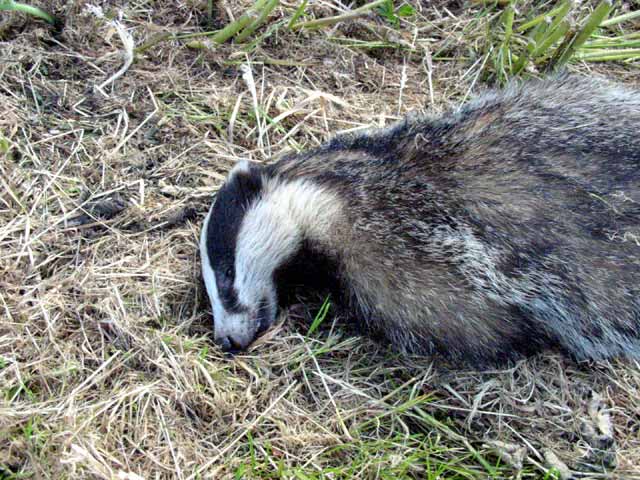
Restraining the hounds of Cerberus I looked upon what was clearly a very recently deceased badger, so fresh indeed that rigor mortis had not yet fully set in. I have only occasionally come across dead badgers or other creatures for that matter that have died of ‘near’ natural causes, as they usually find somewhere out of sight to pass away. This one was lying right across the footpath.


I looked around for signs of a struggle, anything that could explain Brocks demise but nothing was obvious so I looked over the body. A male in good condition save for severe puncture and laceration marks around the neck and shoulder region, similar injuries, all very fresh, were around the nether regions. My suspicions were confirmed when I looked in his mouth and at his feet. Stiff badger hairs were lodged in his teeth and between his claws.


This badger had obviously fell foul to the rigours of badger society and paid the ultimate price, with his life. It is unusual but not unheard of but given the rigours of this dry spring he may have fell foul of food shortages, as the mainly eat earthworms, or purely the need for more space within a growing family. Whatever it was it was it was still strange to find it in such a situation but not as I say unusually to find predators attacked by their own kind or by others.

Dead as a door nail
Badgers are fiercely territorial creatures so this happens fairly regularly, if not so severely. However, other predators are less clear cut as to why they clash, it does however, invariably revolve around either one or two things all relating to competition; either for access to females or food and shelter. Sometimes though, it is just out of sheer might of authority. It happens very frequently throughout the animal kingdom (and I include humans within that kingdom) between the same species (intraspecific) or between different species (interspecific).


A few years ago I witnessed an otter kill and dismember a mink on the Isle of Mull, the first time it had ever been recorded, since then I have seen it several times and so have others such that we are safe in the knowledge that there is a great deal of antagonism between these two species and that this is reflected in the current distribution and population structure of the two species. Only last year I new of a mink family on the river Blyth who made the fatal mistake of birthing within the range of a female otter, she too gave birth but not before she had systematically hunted down and killed every mink from that family.


Nature can be a cruel spectacle but it is all done within reason and as I continued my walk, pondering the fate of poor old Bill Brock my attention was drawn by shrill whistles and flash of azure brilliance. Mrs kingfisher or Mr for that matter was bashing the hell out of a small fish to feed to his nearby brood clearly audible above the noise of the tumbling river. Another flash of colour and it disappeared into a hole in an exposed bank then in seconds it was back out to its perch above a trapped minnow shoal, the process was repeated over and over again and I watched till I was bored, or the dogs were and moved off comfortable that this was life, and death in nature. What a wonderful morning.

Wednesday, April 20, 2011

Tempting fate

We have been really blessed with the weather, so for someone like me who never misses an opportunity to gripe at the lack of it this is a real bonus but as they say we are never happy and I could do with some rain for the garden right now, but only at night on week days only and not on the bank holidays.


Ladybirds great to have around the garden
 The warm spring has seen a flurry of insect activity, there are plenty of ladybirds in the garden and plenty more less desirable ones on the wing too. This will hopefully bode well for many bird species whose previous two breeding seasons have been very much a wash out. Both my nest boxes have occupants and there is also a blue tit nesting in the park wall so here's hoping for a bumper year.


The fine weather is bringing a constant stream of migrants to our shores and also allowed several more intolerant species to stay too. Avocets, a remarkable looking wader, are finding the conditions in and around our Trusts nature reserves in Druridge Bay very much to their liking, as up to 6 birds are regularly present. The marsh harriers too have returned and we are more than hopeful conditions will suit breeding better this year. Its great to see such fantastic birds and proof that the varied management regimes within the Bay’s nature reserves is working to increase the abundance and variety of species present.


Beautiful and elegant avocets
 Whilst doing some WeBs survey counts last week I was also treated to another magnificent summer visitor. Mobbed by a throng of smaller birds and gulls an osprey winged its way lazily up country along the coastline at Hendon in Sunderland (yes it did have a flak jacket on). Hopefully they too will be successful again at Kielder water and thus bolstering further the English population.

Osprey

It is early days but there are indications maybe that some policies are working in the wider context. Druridge Bay, Kielder along with Prestwick Carr and several other larger areas are all part of this bigger picture, this vision of a joined up landscape fit for people and wildlife, the Living Landscape. Getting this right on a large scale will help so many species overcome their population declines and start to flourish again.


Some species however will always need that extra helping hand, I mentioned the dormouse last week and our efforts in woodland management, and another species in dire need of an extra helping hand is the water vole. This little fellow once so familiar to many of use along our rivers and streams is now confined to the north Pennines. Lost from the bulk of the County by predation by non native American mink and habitat loss this species lives in reasonable densities where it survives but try as you might it is very difficult to get them to expand their range through conventional habitat improvements.


Mink and kit
 It’s a complicated affair but basically water voles won’t expand their range unless there is a good reason to do so, that being the presence or near presence of their own species. The habitat can be superb but if there are no other voles in the vicinity they will just stay put such is their dispersal strategy.


It would be wrong to contemplate encouraging the species to expand without any control of mink, its arch nemesis. These however are some of the decisions you have to take to safeguard a species.


Damp water vole
 I was reminded of these factors last week whilst in Allendale, there is some superb habitat available but no water voles, yet just a few miles upstream they are abundant in places. Around Druridge Bay this was the same storey, along the Wansbeck too, in fact almost everywhere in the region. I can remember them there myself whilst conducting otter surveys now they are all gone.


So whilst we have some success stories that fill the media there are as many that are not quite as successful or as easy to solve as some may think.


For the water vole there is hope but we wait with baited breath for its outcome, but that they say is another storey for another day.